DeFibAmerica - Fixing the broken link in the Cardiac Chain of Survival in Rural America
Cardiac relate Death is the #1 cause of death in the USA, and has been since 1900

AED's Save Lives!
Yes really! Seattle Washington is home of a hugely successful program, 30 to 70% of sudden cardiac arrest patients could walk out the door of your hospital, even in Rural America... with the right program.
After five years of effort, three sessions of effort with the Indiana General Assembly House Bill 1040 was passed and signed into law by governor Mitch Daniels... "Immunity for Fast Responders"
Indiana General Assembly House Bill 1040
American College of Cardiology Indian Chapter
Indiana Health Care Association
Indiana Volunteer Firefighters Association
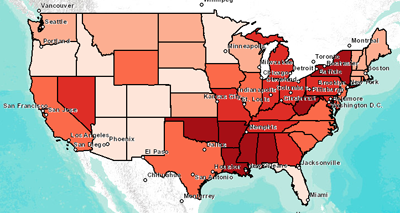
Death rates in the USA for Heart Disease
Heart Disease Facts
Heart disease is the leading cause of death for both men and women. Half of the deaths due to heart disease in 2006 were in women.1
In 2006, a total of 631,636 people in the United States died of heart disease.* Of the deaths that year, 26%—or more than one in every four—were caused by heart disease.1
In the United States, someone has a heart attack every 34 seconds. Each minute, someone in the United States dies from a heart disease-related event.2
Heart disease is the leading cause of death for people of most racial/ethnic groups in the United States, including African Americans, American Indians or Alaska Natives, Hispanics, and whites. For Asian Americans, heart disease is second only to cancer.3
In 2010, heart disease will cost the United States $316.4 billion.2 This total includes the cost of health care services, medications, and lost productivity.
* For this fact sheet, the term “heart disease” refers to several different types of heart conditions. The most common type is coronary artery disease, also known as coronary heart disease.
Risk Factors
Nine out of 10 heart disease patients have at least one risk factor.2 Several medical conditions and lifestyle choices can put people at a higher risk for heart disease, including:
High cholesterol
High blood pressure
Diabetes
Cigarette smoking
Overweight and obesity
Poor diet
Physical inactivity
Alcohol use
1. Heron MP, Hoyert DL, Murphy SL, Xu JQ, Kochanek KD, Tejada-Vera B. Deaths: Final data for 2006 [PDF–2.3M]. National Vital Statistics Reports; 57(14). Hyattsville, MD: National Center for Health Statistics. 2009.
2. Lloyd-Jones D, Adams RJ, Brown TM, et al. Heart Disease and Stroke Statistics—2010 Update. A Report from the American Heart Association Statistics Committee and Stroke Statistics Subcommittee. Circulation. 2010;121:e1-e170.
3. Heron MP. Deaths: Leading causes for 2004 [PDF–3.2M]. National Vital Statistics Reports; Vol. 56 No. 5. Hyattsville, MD: National Center for Health Statistics. 2007.
CDC.gov source
20 minutes is 200% dead, 3 minutes gives rural America a Chance!
Every minute an AED is delayed, that is the 3rd link in the chain of Cardiac Survival, is 10% less chance of living another day.
American cities, airports, and businesses are deploying AED's, Automated External Defibrillators, with tremendous results. The best of the best are seeing 70% save rates. Thirty to Seventy percent save rates for sudden cardiac arrest to discharge from the hospital is a fantastic result of the AED technology being used in a very timely fashion. But in rural America it can take 20 minutes for an Ambulance to show up with an AED, that is 200% dead. Living in rural America doesn't have to be a death sentence. Rural American's have a long tradition of looking out for each other. When the Cows are out, we know who to call and often help get the cows back in the fenced pasture.
With today's ubiquitous 911 mapping dispatch systems, easy to use, low cost, AED technology; Cell and Texting systems, we can now deploy AED's in the hands of "FAST RESPONDERS" that is a neighbor willing and trusted by neighbors to give that lifesaving hand in the most urgent time of need, a cardiac arrest. DeFib America, Three Minutes to Defibrillation in Rural America, Inc. is working to change rural America... to bring live saving help in minutes, so Ambulance (EMT's and Paramedics) crews have a live patient to work with as they complete the chain of cardiac survival. All the best trained med-evac helicopters crews, EMT's, surgeons, and paramedics, will fail without the efforts of a Fast Responder with an AED arriving in minutes and giving CPR and heart regrouping shock.
Think of a tick-tack-toe grid, every Fast Responder is backed up by eight other Fast Responders to insure a volunteer is nearly always available, day and night. Each square represents a 3 x 3 mile area, with an AED/First Aid Kit equipped Fast Responder in the middle. They may never deploy, or they might be called on a couple times a year, but when the call comes they need to be trained and act, act to do the right thing when minutes count!